How to Give a Horse Dewormer Paste: Step-by-Step Guide
A practical guide to administering oral dewormer paste to your horse. Covers preparation, positioning, administration technique, and troubleshooting common challenges.
QZQAB Editorial Team
Equine Health Content Specialists
Important Safety Information
This article is for educational purposes only. It does not constitute veterinary advice. Always consult a licensed veterinarian for guidance specific to your horse.
Before You Begin
Administering oral dewormer paste is one of the most common tasks in routine horse care. While the process is straightforward, proper preparation makes a significant difference in how smoothly the experience goes for both you and your horse.
Before administering any dewormer product:
- Confirm with your veterinarian that your horse needs deworming and that the product you have is appropriate. A fecal egg count test is the gold standard for determining need.
- Read the complete product label before opening the tube. Our guide on reading dewormer labels explains what to look for.
- Verify the product has not expired and has been stored properly. See our storage guide.
Reminder: All dewormer products discussed in this guide are for use in horses only. Never use equine products on other species, including humans.
Step 1: Gather Your Supplies
You will need:
- The dewormer paste tube — confirm it is the correct product and within its expiration date
- Halter and lead rope — for safe restraint
- Weight estimate — you need to know your horse's approximate weight. A livestock scale is most accurate, but an equine weight tape provides a reasonable estimate
- Clean hands or gloves — for safe handling
Optional but helpful:
- A small treat for afterward (to reward cooperation)
- An assistant for handling, especially if your horse is inexperienced or resistant
Step 2: Estimate Your Horse's Weight
Accurate weight estimation is important because dewormer paste is administered based on body weight. Underestimating can result in underdosing, while overestimating wastes product (and with some products, may approach unnecessary dosing levels).
Methods of weight estimation:
- Livestock scale — the most accurate method
- Equine weight tape — a specialized measuring tape used around the horse's girth area; reasonably accurate for most adult horses
- Weight calculation formula — some horsemen use the formula: (heart girth × heart girth × body length) ÷ 330 = approximate weight in pounds
Note: For foals and young horses, weight estimation is especially critical because their lower body weight means that over- or underdosing is proportionally more significant. See our guide on deworming foals for additional considerations.
Step 3: Set the Dose
Most dewormer paste tubes include a weight-based dial or plunger lock that allows you to set the appropriate dose before administration:
- Locate the dose ring or dial on the paste plunger
- Turn or slide it to the appropriate weight marking on the syringe
- Confirm the setting before approaching your horse
Follow the dose markings on your specific product's label exactly. Do not estimate or adjust dosing beyond what the label specifies. If you are unsure about the correct dose for your horse, contact your veterinarian.
Step 4: Position Your Horse
Choose a calm, confined area where your horse feels comfortable. A stall, grooming bay, or quiet area with secure footing works well.
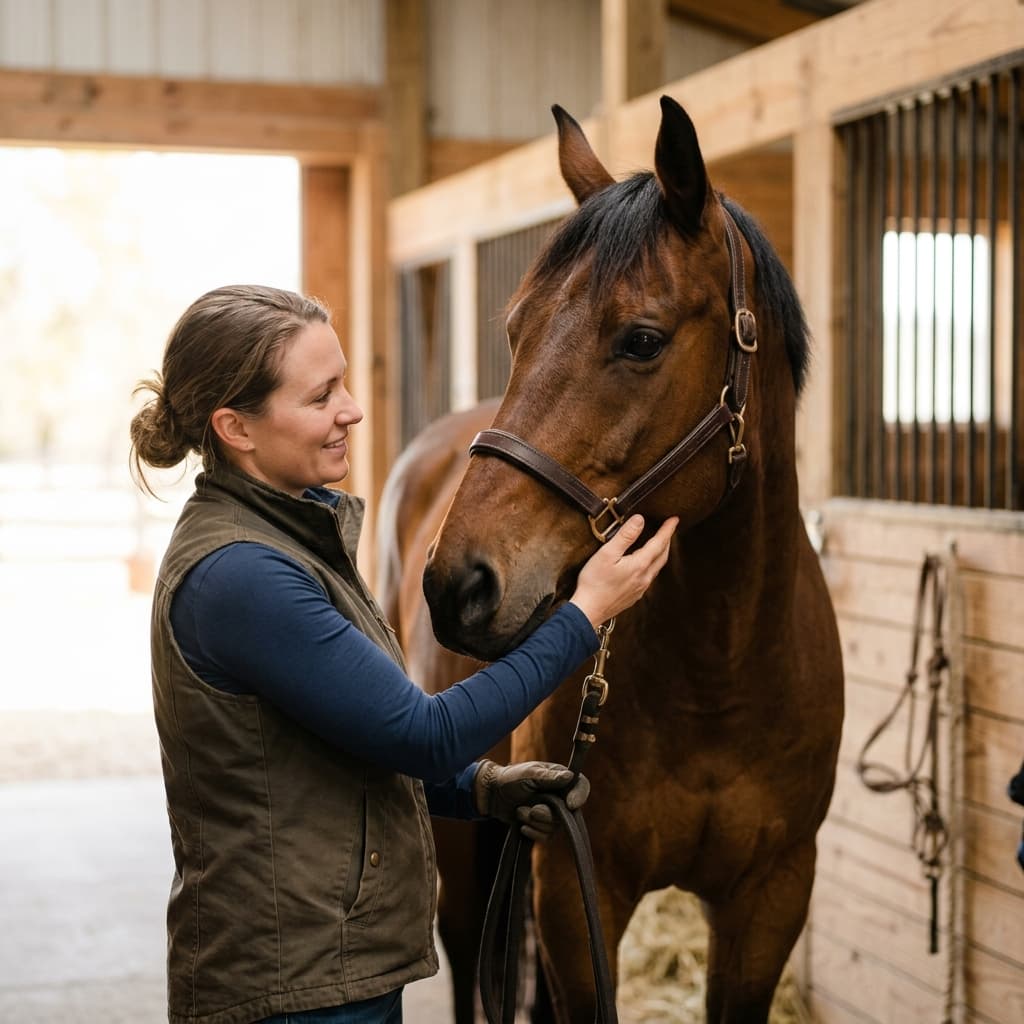
- Halter your horse and secure with a lead rope — having an assistant hold the horse can make the process easier
- Ensure your horse's mouth is empty — remove any hay, grain, or treats from the mouth before administration
- Stand to the side of your horse's head — never directly in front in case the horse throws its head
Step 5: Administer the Paste
This is the core of the process:
- Remove the tube cap and have the tube ready in your dominant hand
- With your other hand, gently open the horse's lips at the corner of the mouth — the gap between the incisors and premolars (the "bars" of the mouth) provides natural access
- Insert the tip of the syringe into this gap, angling it toward the back of the tongue
- Depress the plunger smoothly to deliver the paste onto the back of the tongue
- Remove the tube and immediately lift the horse's head slightly by placing your hand under the chin — this encourages swallowing rather than spitting
The entire administration should take only a few seconds once you are in position.
Step 6: Confirm the Horse Swallowed
After depositing the paste:
- Hold the horse's head elevated for 10-15 seconds to discourage spitting
- Watch for chewing and swallowing motions — this is a good sign
- Check for paste residue around the mouth — a small amount on the lips is normal, but if a large portion appears to have been spit out, contact your vet about whether re-dosing is appropriate
Do not attempt to re-dose without veterinary guidance, as you may be administering more product than intended.
Troubleshooting Common Challenges
The horse raises its head / evades the syringe
- Position yourself to the side, not in front
- Have an assistant hold the lead rope and gently steady the horse's head
- Some horses respond to having their forehead or poll gently held
- If your horse is very tall, position yourself on a slight elevation or have the horse stand in a lower area
The horse spits out the paste
- Make sure you deposit the paste on the back of the tongue, not the front
- Lift the horse's chin immediately after administration
- Ensure the horse's mouth was empty of feed before you started
- Apple-flavored products (like the ivermectin paste products we review) may be accepted more readily
The horse is head-shy or needle-shy
Horses that associate syringes with negative experiences may resist. To build positive associations:
- Practice inserting an empty syringe (without product) with a treat reward
- Use a syringe filled with applesauce for practice sessions before deworming day
- Be calm and patient — rushing increases resistance
- Consider having your veterinarian administer the dewormer if your horse is extremely resistant
First-time deworming (foals/young horses)
Young horses that have never experienced paste administration need especially gentle handling. See our foal deworming guide for age-specific considerations.
After Administration
Monitor Your Horse
After deworming, observe your horse for at least 24-48 hours for any unusual signs:
- Loss of appetite — mild and temporary appetite changes are not uncommon
- Mild loose stool — can occur as parasites are expelled
- Signs of colic — excessive rolling, pawing, looking at flanks, or refusing to eat may indicate a problem
If you observe signs of colic, distress, or any reaction that concerns you, contact your veterinarian immediately. See our guide on when to contact a vet for a full list of warning signs.
Clean Up
- Replace the cap on the tube and dispose of or store unused product properly
- Wash your hands thoroughly after handling dewormer products
- Record the date, product, and dose administered — this helps your veterinarian track your horse's deworming history
Frequently Asked Questions
Does it matter what time of day I give the dewormer?
There is no evidence that time of day significantly affects dewormer efficacy. Choose a time when your horse is calm and you are not rushed. Some horse owners prefer to deworm before a period when the horse will be on dry lot (rather than pasture) to reduce pasture contamination from expelled parasites.
Should I fast my horse before deworming?
Product labels generally do not require fasting before paste administration. However, ensuring the horse's mouth is empty of feed at the moment of administration helps with product delivery and swallowing.
Can I mix dewormer paste with feed instead?
Paste products are designed for direct oral administration, not for mixing with feed. If your horse strongly resists paste, talk to your veterinarian about alternative product formats like granules that are designed to be mixed with feed. See our comparison of dewormer formats.
How long does the paste take to work?
The timeline varies by product and parasite type. Refer to your product label and veterinarian for specifics. Your vet may recommend a follow-up fecal egg count at an appropriate interval to confirm effectiveness.
Summary
Administering dewormer paste is a routine skill that becomes easier with practice. The keys to success are preparation (right product, right dose, right timing based on vet guidance), calm and confident handling, proper placement on the back of the tongue, and careful monitoring afterward.
For information on the specific ivermectin paste products we review, visit our product page.
This article is for educational purposes only. It does not constitute veterinary advice. Always consult a licensed veterinarian for guidance specific to your horse.
Related Articles
Horse Dewormer Expiration Dates: Do They Matter?
Expired dewormers may lose effectiveness. Understanding expiration dates helps you protect both your investment and your horse's health.
How to Store Equine Paste Products Properly
Storing dewormer paste correctly preserves its effectiveness. Follow these guidelines to ensure your investment stays potent.
Traveling With Horses: Deworming Considerations
Traveling with horses introduces parasite management questions. Here's what to think about before, during, and after travel.
Independent affiliate guide. Not affiliated with or endorsed by any product manufacturer, marketplace, or brand mentioned on this site. As an Amazon Associate I earn from qualifying purchases.